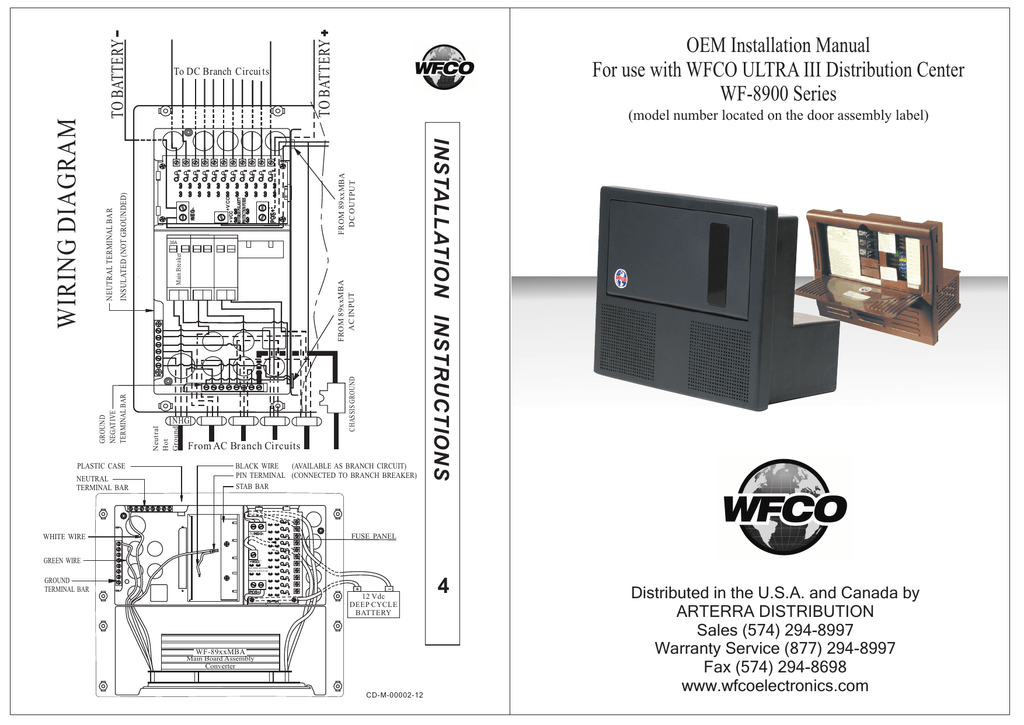
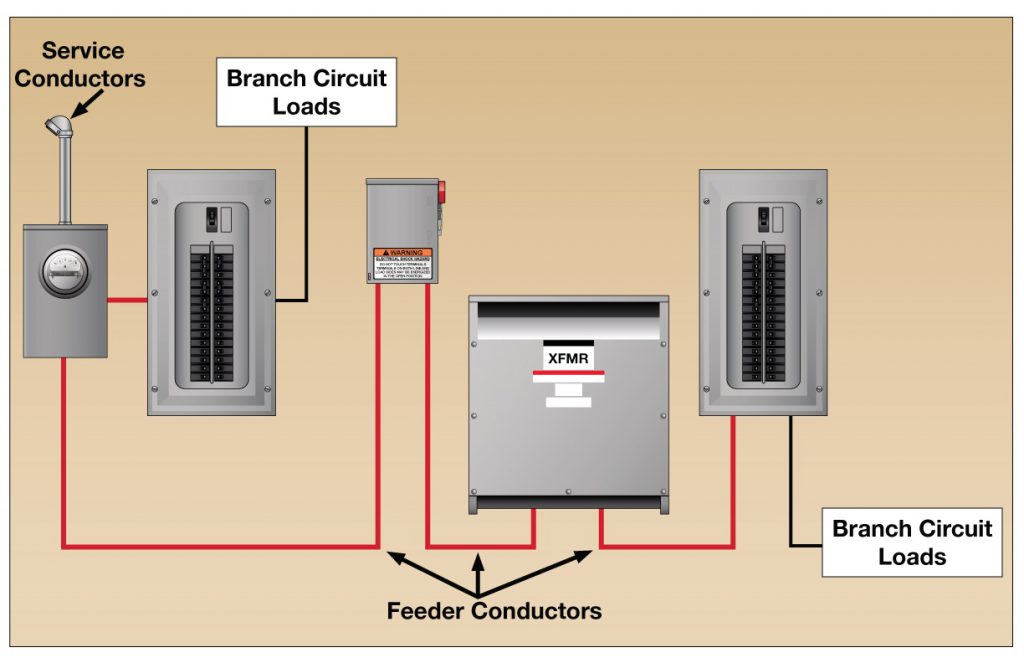
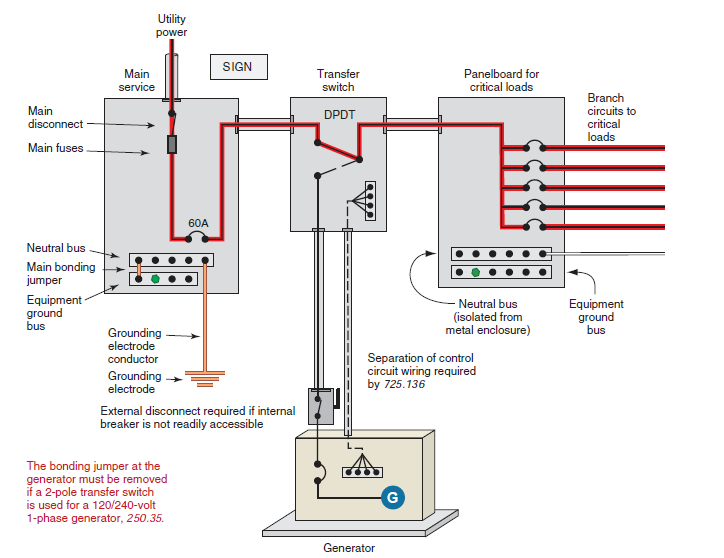
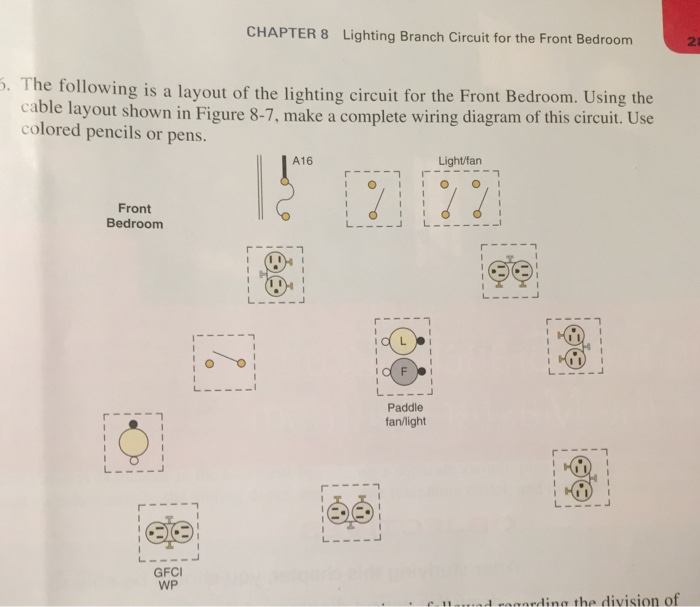
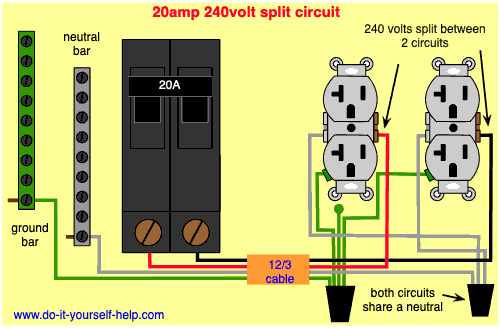
A multiwire branch circuit in the electrical code is defined as a branch circuit that consists of two or more ungrounded conductors two or more hot wires that have a voltage between them they are not on the same electrical phase and so are connected to different buses in the electrical panel and a grounded conductor the neutral wire. Multi wire branch circuit wiring diagrams.

Branch Circuit Feeder And Service Calculations Part Xlv
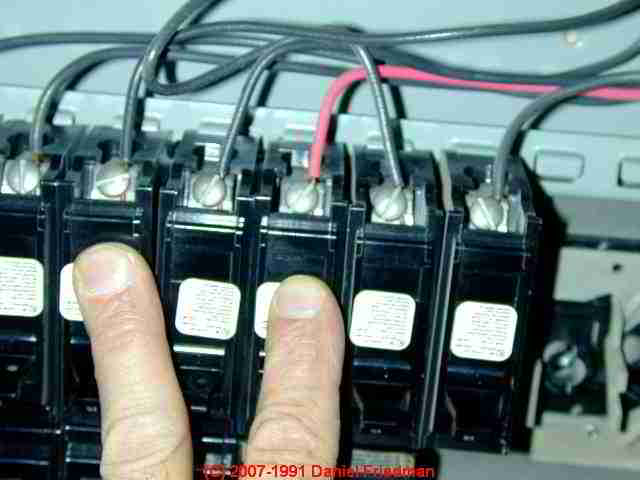
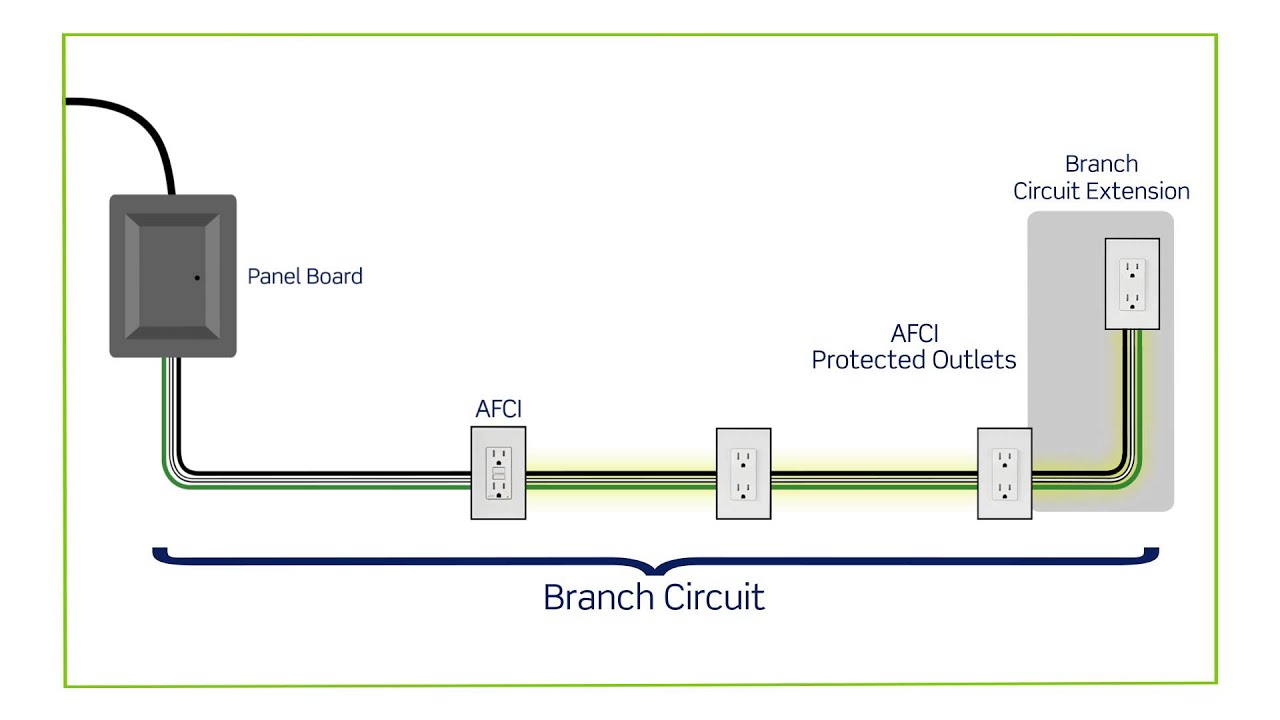
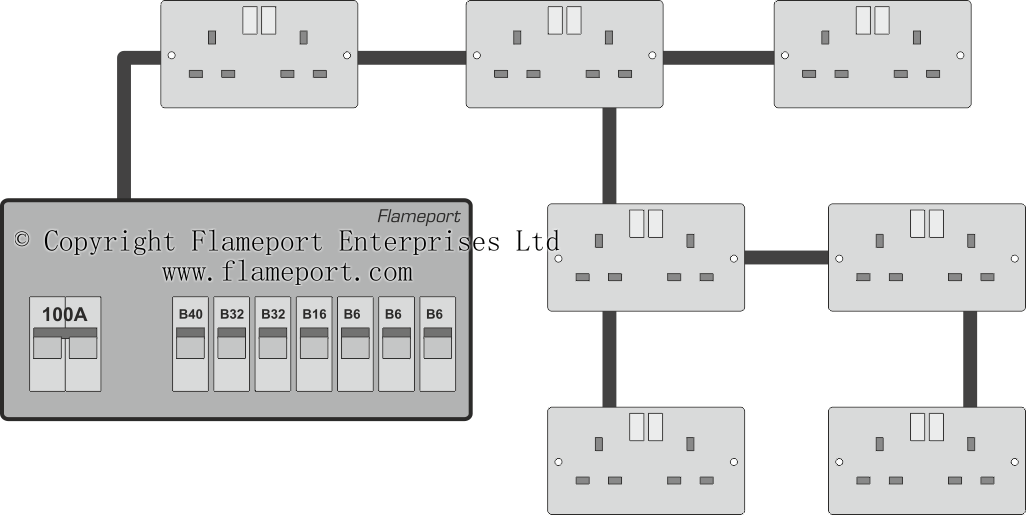
Branch circuit wiring diagram. Multiwire branch circuits that supply devices or equipment on the same yoke must also be provided with a means to disconnect simultaneously all ungrounded conductors that supply those devices or equipment at the point where the branch circuit originates 2104b fig. This photo is an example of a multiwire branch circuit incorrect wiring diagram. Wiring for two 20 amp 120 volt circuit breaker. For 249 volt circuits the amperage is more often 30 40 or 50 amps. 3dwelling unit branch circuits can supply only loads within or associated with the dwelling unit. A 15 amp circuit is usually used for wall receptacle outlets and room light fixtures.
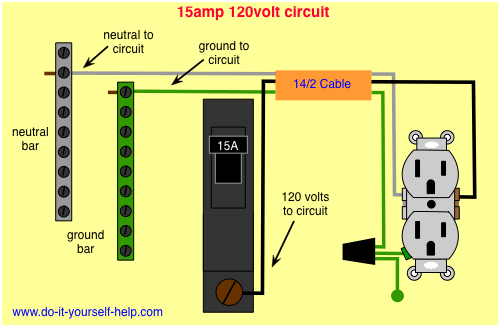
See example diagrams below. The amperage of each branch circuit can be read by the printing on the lever of each circuit breaker. This wiring diagram illustrates installing a 15 amp circuit breaker for a 120 volt branch circuit. The white wire is the neutral providing return current for both of the a and b phase 120v. The red wire is usually the b phase 120v. Receptacle ground connection diagram shown separately.
This photo is an example of a multiwire branch circuit preferred wiring diagram. Why are multiwire branch circuits used. The 142 awg cable for this circuit includes 2 conductors and 1 ground wire. Branch circuits for 120 volt circuits are usually 15 amp or 20 amp circuits although occasionally they will be larger than that. Multiwire branch circuits can offer fewer conductors reduce the raceway size and reduce voltage. The bare copper wire is the ground.
Gallery of Branch Circuit Wiring Diagram